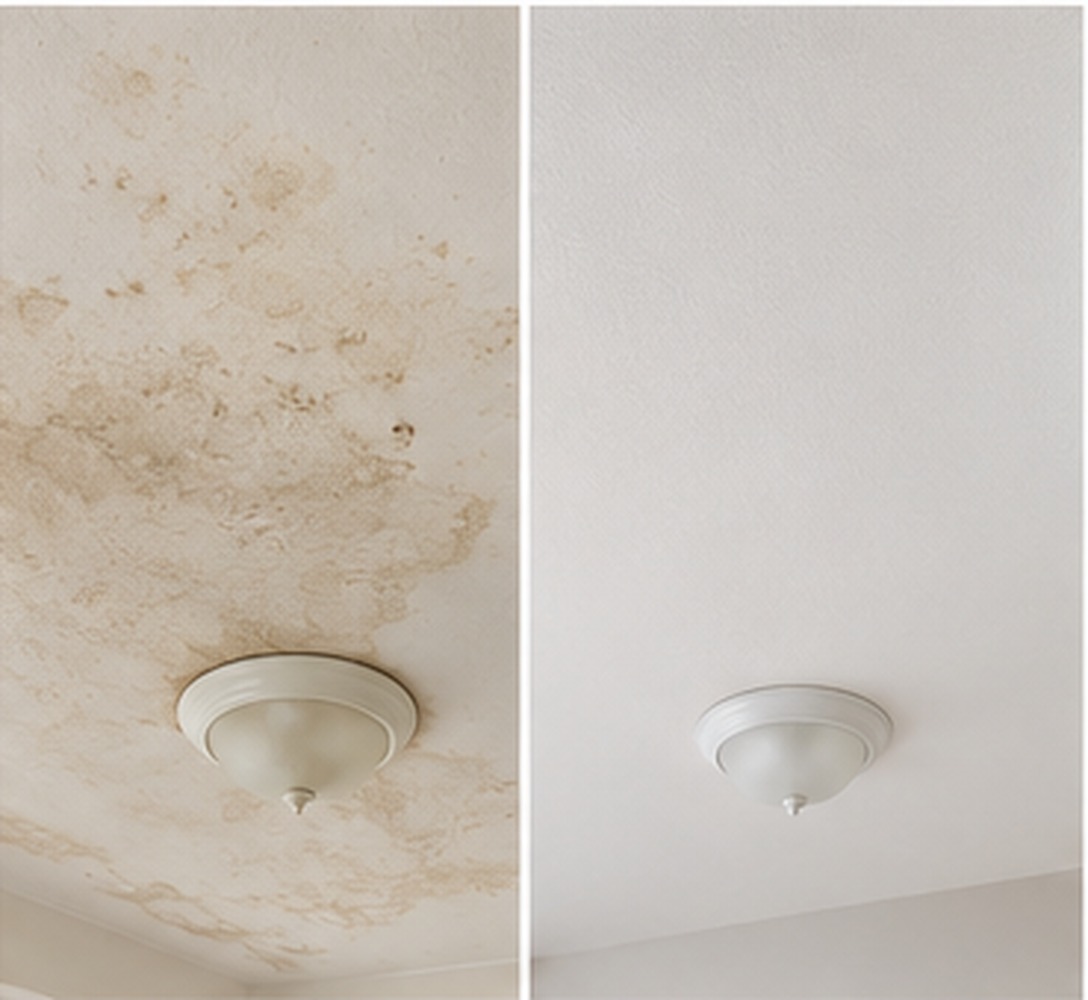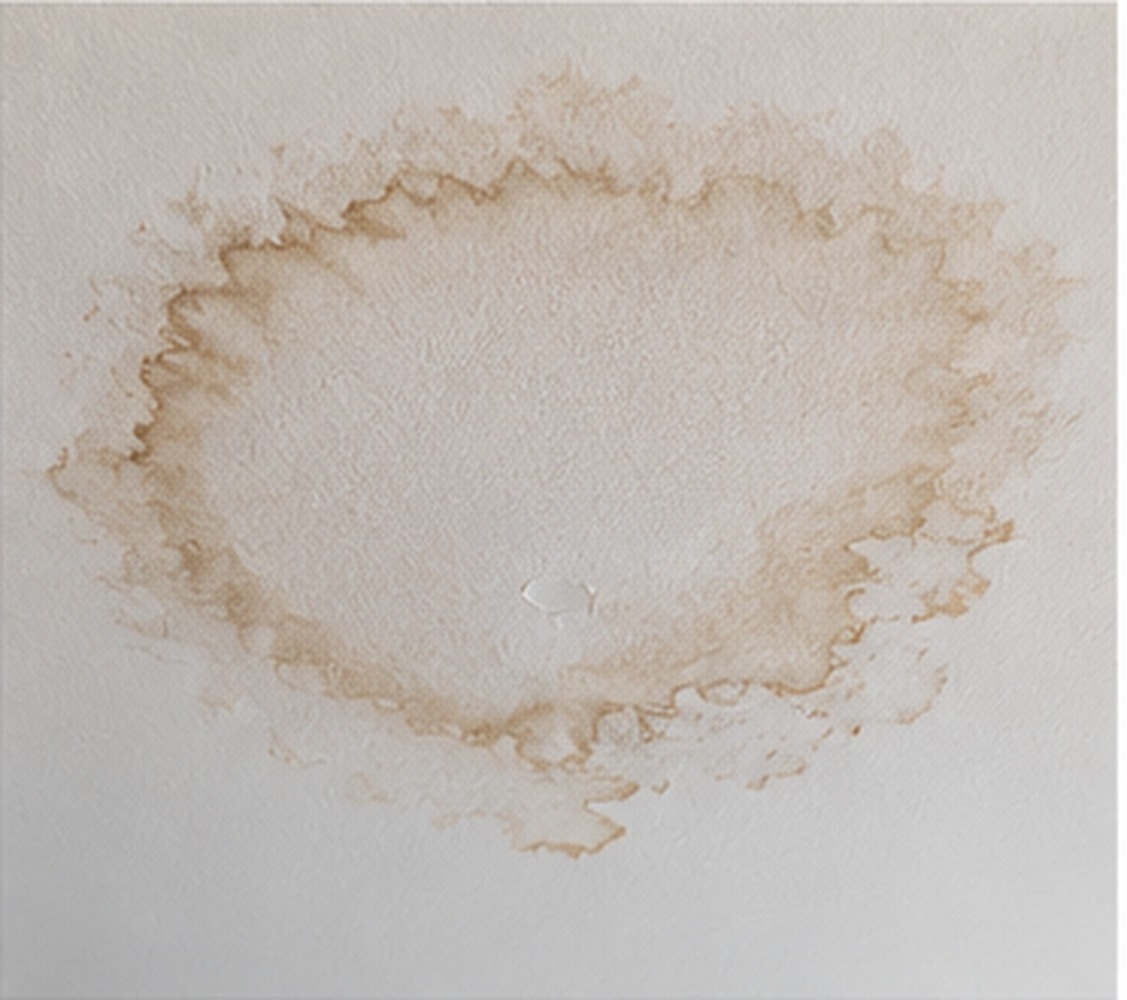
Anyone can fill a hole. The reason a ceiling repair either vanishes or screams "patched right here" comes down to one thing: how well the new texture blends into the old. It's the most underrated skill in the trade.
The common ceiling textures
- Smooth — looks easy, but flaws and lap marks show under raking light, so it's less forgiving than it seems.
- Orange peel — a fine spatter, matched by dialing in spray pressure and dilution.
- Knockdown — sprayed, then flattened with a knife after it sets; timing is everything.
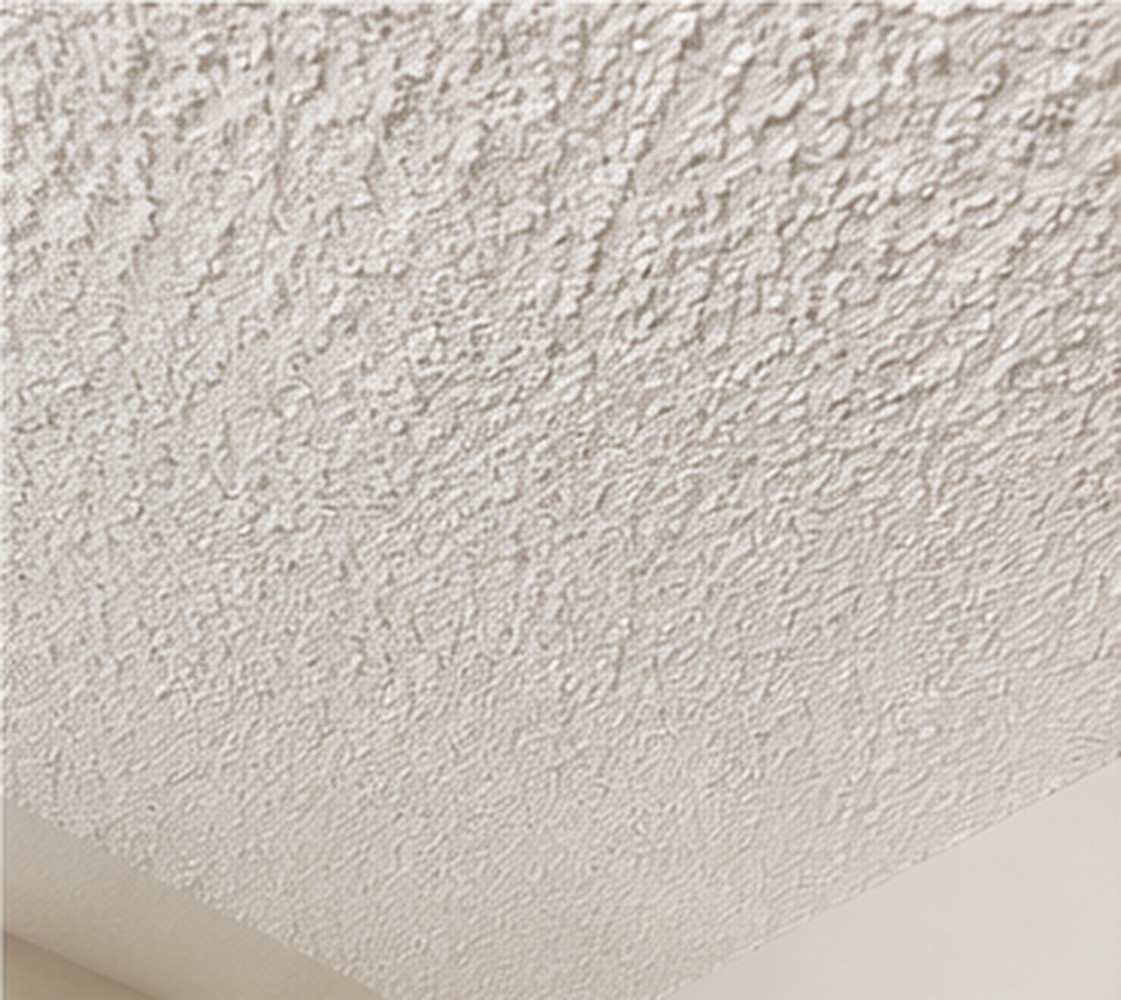
- Popcorn / acoustic — sprayed aggregate, notoriously hard to blend on a partial repair.
Why matching is so hard
Texture is a combination of material, tool, pressure, dilution, distance and timing — and the surrounding ceiling has aged, yellowed and collected a particular pattern over years. A pro effectively reverse-engineers all of that, then tests on a board before touching your ceiling. Get any variable wrong and the patch catches light differently from the rest of the room.
The lighting test
A match that looks perfect at midday can reveal itself at night under a single light source, because raking light exaggerates texture. Good crews check their work under different lighting before calling it done — that's the difference between a repair you forget about and one you notice every evening.
When blending isn't possible
Sometimes an existing texture is too distinctive, or the ceiling too patched-over already, to blend a small repair invisibly. In those cases re-texturing the whole ceiling — or removing texture entirely for a smooth finish — produces a cleaner result than chasing an impossible match. An honest pro will tell you when that's the case.
Key takeaways
- The patch is easy; matching the surrounding texture is the real skill.
- Texture depends on material, pressure, dilution, distance and timing.
- Always check a match under raking and night lighting, not just midday.
- Sometimes re-texturing the whole ceiling beats chasing an impossible blend.
Frequently asked questions
Can a ceiling repair be truly invisible?
With smooth ceilings and skilled texture matching, yes — a good repair blends so you can't find it. Distinctive or heavily patched textures are harder and sometimes call for re-texturing the whole ceiling.
Why does my ceiling patch show up at night?
Raking light from a single fixture exaggerates surface texture. A patch that matches at midday can stand out under angled evening light, which is why pros check under multiple lighting conditions.
Can I match popcorn texture myself?
Spray-can popcorn patch products exist, but blending into aged, yellowed texture convincingly is difficult. Small, out-of-the-way repairs may be fine; prominent ones usually benefit from a pro.
Get this fixed by a vetted pro
Tell us about your ceiling and we'll match you with a local pro — free, in about a minute.
Get my free quote →